April 16, 2026

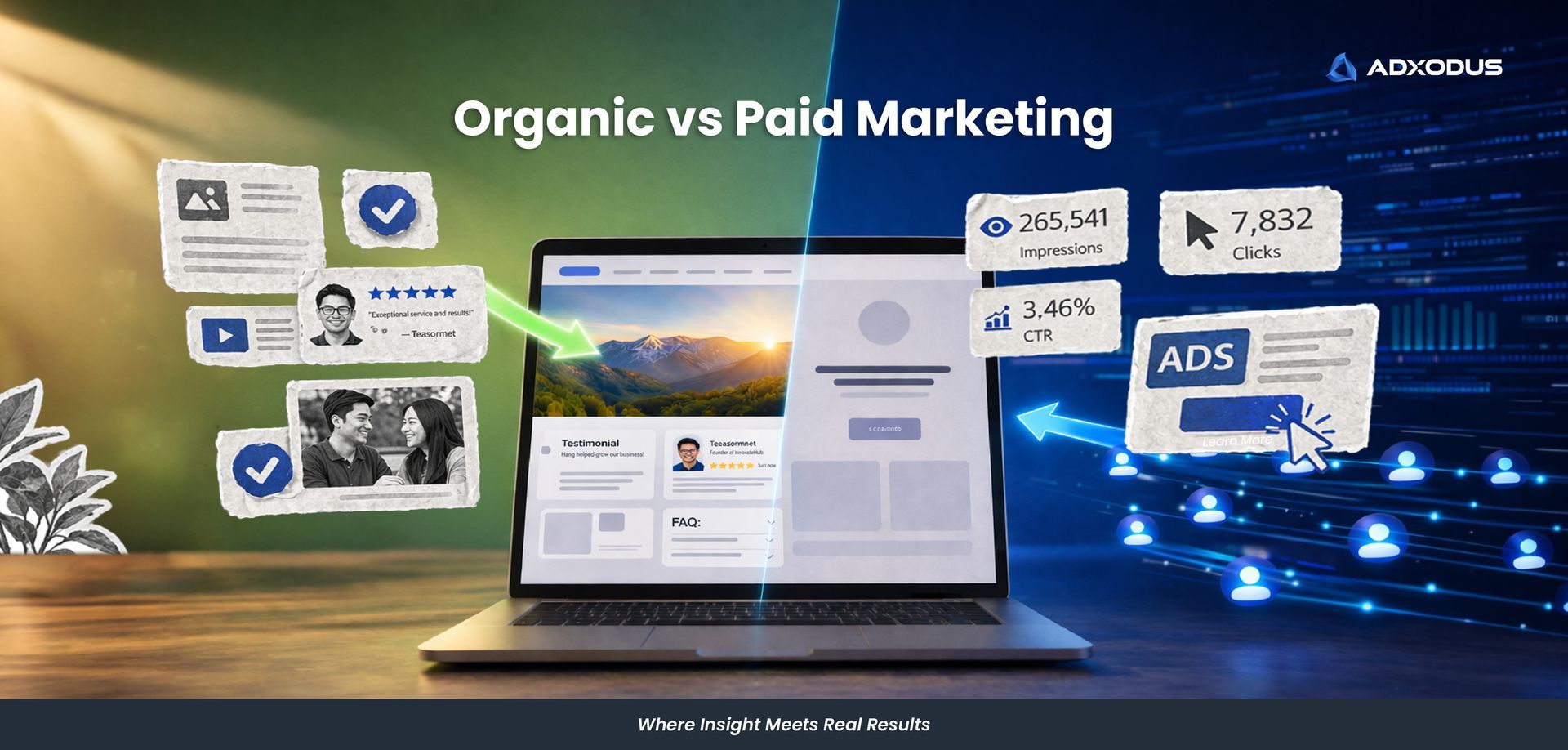
Organic vs Paid Marketing: Should You Build Content First?

This article has been written by Admin Adxodus

You run an ad. People click. Traffic comes in. 


Then nothing happens. 


No enquiries, no real traction, just numbers moving without results. At that point, most businesses start questioning their targeting, budget or ad creatives. 


But there is one question that often gets overlooked. When someone clicks your ad, what do they actually see when they land on your page? 


This is where organic content becomes essential. Paid ads drive visibility, but visibility alone does not build trust. Organic marketing shapes how prospects evaluate your credibility once they discover you. 

Why Businesses Prioritise Paid Advertising Over Organic Content 

Paid advertising is often the first step businesses take in their digital marketing strategy. It offers speed, immediate visibility and measurable results, which makes it especially appealing for businesses focused on lead generation. 


Organic marketing, in comparison, takes time and consistency. Results build gradually, and the impact is not always immediate. Because of this, many businesses choose to focus on paid ads first, with the intention of developing their content later. 


There is nothing wrong with running paid campaigns early. However, when paid advertising runs without a strong organic presence, traffic increases, but conversions do not always follow. 

What Organic Content Builds in a Digital Marketing Strategy

When users discover your business through paid ads, they rarely make instant decisions. Instead, they explore your website, browse your social media and look for signals that help them evaluate your credibility. 


This is where organic marketing becomes essential. A consistent content presence shows that your business is active, knowledgeable and aligned with your audience’s needs. It builds familiarity and reinforces trust over time. 


On the other hand, outdated content or inactive platforms can create hesitation, even if your service is strong. In digital marketing, perception plays a critical role in decision-making. 


As Rand Fishkin said: 


“The best way to sell something is to earn attention first.” 


Organic content earns that attention. It shapes how your brand is perceived before any conversion takes place. 

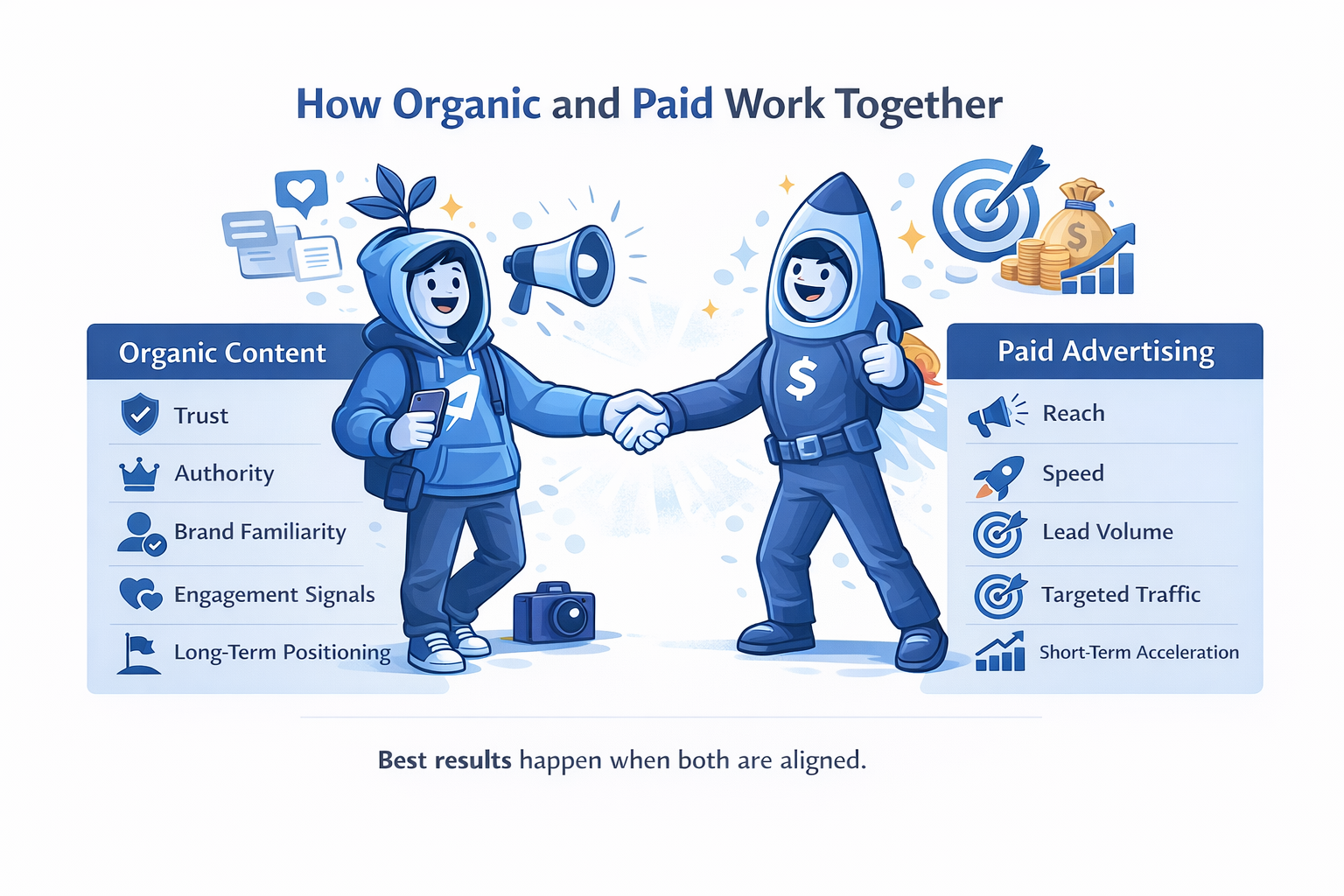
How Organic and Paid Marketing Work Together 

Organic and paid marketing should not compete. They serve different roles within a structured digital marketing strategy. 


Organic content builds trust and engagement signals. Paid advertising expands reach and accelerates exposure. 


When organic content is consistent, paid campaigns tend to perform more efficiently. Visitors engage more confidently, retargeting becomes stronger and messaging can be refined using real audience feedback. Instead of guessing what works, you amplify what has already shown traction. 


Acceleration works best when it is built on structure. 

Illustration by Adxodus 

When to Use Paid Advertising in Your Marketing Strategy 

There are situations where paid campaigns are necessary, such as launching a new product, entering a competitive market or generating immediate lead flow. 


However, even in these cases, organic presence should not be neglected. Organic content acts as infrastructure. Paid advertising acts as acceleration. Without infrastructure, acceleration can become expensive. 


The real question is not organic versus paid. It is whether your business is ready to convert the traffic you are about to invest in. 

Building Sustainable Growth with Organic and Paid Marketing 

Organic marketing builds credibility over time. Paid advertising drives targeted visibility. When both are aligned intentionally, marketing becomes more sustainable and cost-efficient. 


Before increasing your ad budget, assess whether your brand presence reflects the authority you want prospects to see. Visibility attracts attention. Credibility earns decisions. 


If you are unsure how to structure your organic content and paid campaigns effectively, the team at Adxodus is always happy to provide clarity and direction.

By Melissa Soliano April 3, 2026
It’s quite common to see businesses run marketing campaigns that target the whole of Malaysia. Have you noticed this too? Not just in your own campaigns, but also when you scroll through ads online. A promotion meant for “all Malaysians.” A message that tries to speak to everyone at once. And to be fair, this approach isn’t wrong. Malaysia is a connected market, and reaching a wide audience can sometimes make sense. But here’s something we’ve observed over time. Malaysia may be one country, but its markets behave very differently. A customer in Kuala Lumpur doesn’t always search or buy the same way as someone in Penang. Purchasing behaviour in Johor may look different from Sabah. Even language preference, urgency, and spending habits can vary depending on where people live. So the question becomes: if customer behaviour is different across regions, should marketing treat the whole country the same way? This is where hyperlocal marketing starts to make a lot more sense.
Malaysia skyline with growth arrow showing 82% lead increase from travel agency Google Ads.
By Admin Adxodus March 2, 2026
Discover how Adxodus increased leads by 82% for a travel agency in 90 days using refined Google Ads targeting and performance strategy.
By Melissa Soliano April 3, 2026
It’s quite common to see businesses run marketing campaigns that target the whole of Malaysia. Have you noticed this too? Not just in your own campaigns, but also when you scroll through ads online. A promotion meant for “all Malaysians.” A message that tries to speak to everyone at once. And to be fair, this approach isn’t wrong. Malaysia is a connected market, and reaching a wide audience can sometimes make sense. But here’s something we’ve observed over time. Malaysia may be one country, but its markets behave very differently. A customer in Kuala Lumpur doesn’t always search or buy the same way as someone in Penang. Purchasing behaviour in Johor may look different from Sabah. Even language preference, urgency, and spending habits can vary depending on where people live. So the question becomes: if customer behaviour is different across regions, should marketing treat the whole country the same way? This is where hyperlocal marketing starts to make a lot more sense.
Malaysia skyline with growth arrow showing 82% lead increase from travel agency Google Ads.
By Admin Adxodus March 2, 2026
Discover how Adxodus increased leads by 82% for a travel agency in 90 days using refined Google Ads targeting and performance strategy.

Share this article